One sensor. A thousand wavelengths.
The Vispect Spectral Sensor is a solid-state optical engine that fires multispectral light through your sample and reads the absorption signature of every organic molecule inside. No moving parts. No chemistry. Just light, math, and five seconds.
No moving parts. No mechanical wear. No annual calibration cycle. The sensor you buy is the sensor you keep.
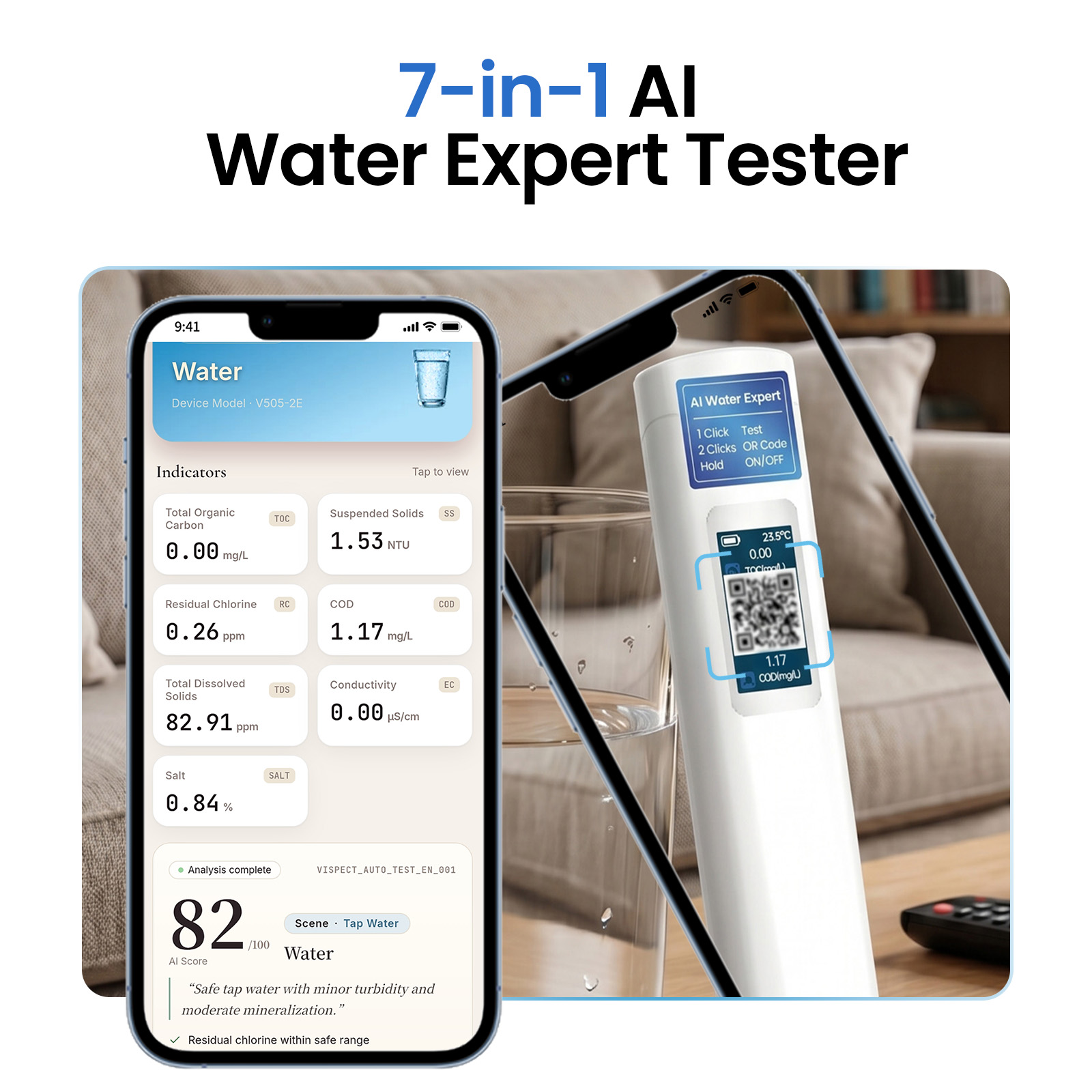
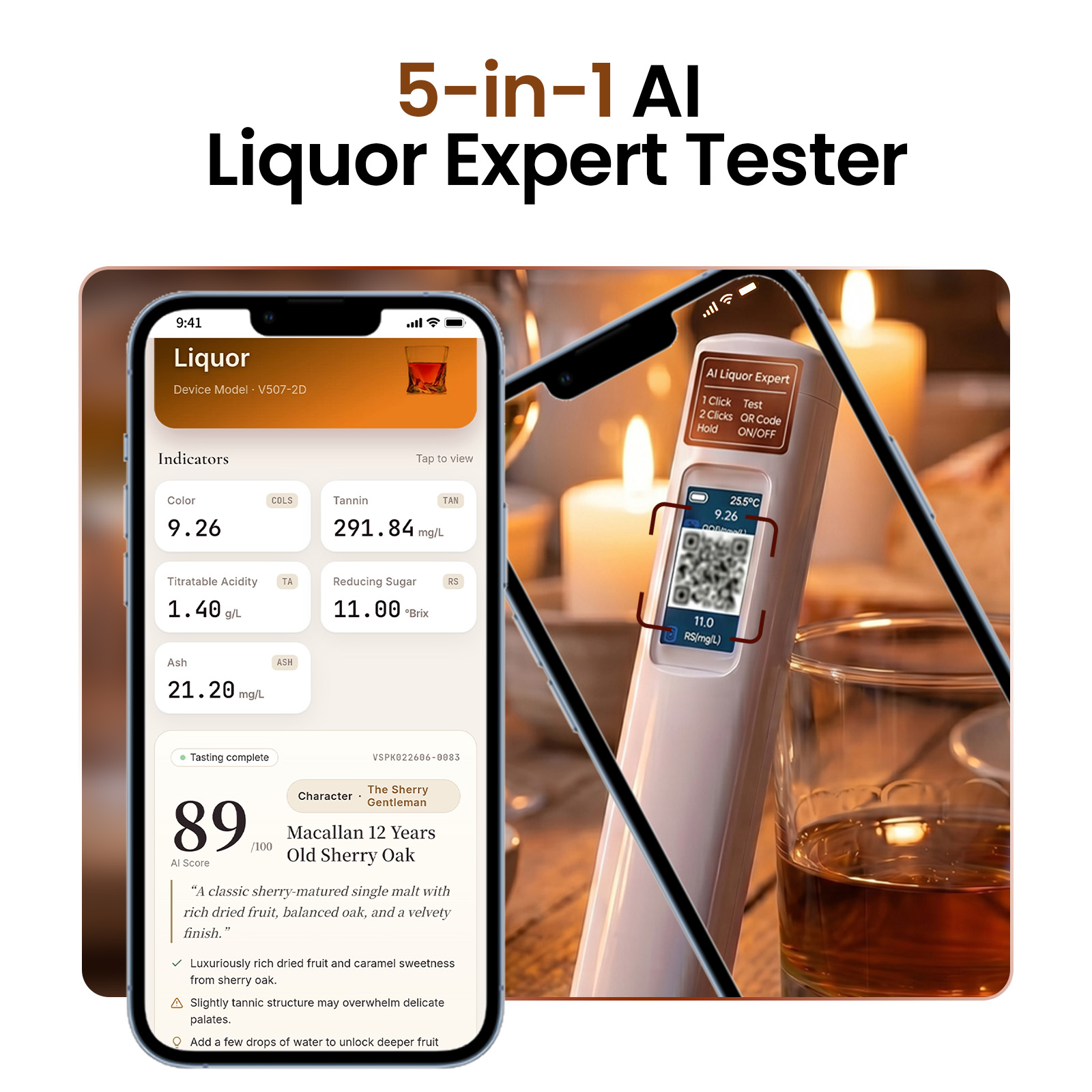
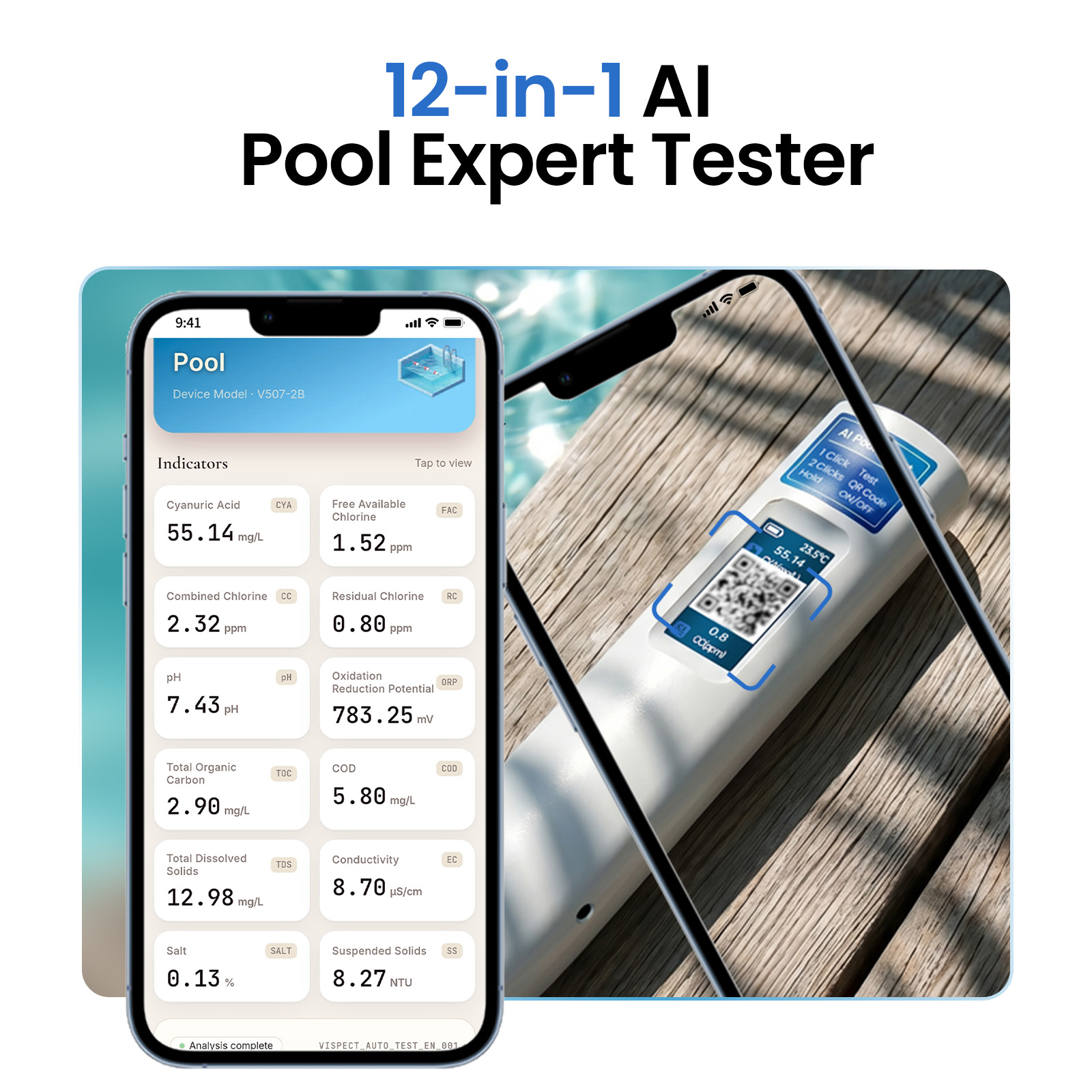
By analyzing how light is absorbed across hundreds of wavelengths, we identify organic compounds — COD, TOC, tannins, anthocyanins — in five seconds.
100% optical scanning. Zero chemicals, zero strips, zero waste. The same sensor reads your tap water and your Cabernet.
Sensor Specifications
Four sensors built on this engine.

Guides & resources
The four methods that matter — strips, TDS pens, lab panels, and spectral scans — compared side-by-side.
A TDS pen measures conductivity — one number. Spectral sensing reads the molecular fingerprint, including organic load TDS can't see.
What to check yourself between annual lab tests — pH, hardness, TDS, iron, and organic load.
The six numbers that run your pool — pH, chlorine, alkalinity, hardness, CYA, organics — and how to read them in seconds.
Salt cells still make chlorine. Here is what shifts in your testing routine — salinity, CYA, pH drift, and cell health.
Refills, colour-matched fakes, and evaporated cork-sick bottles — the measurable signals that give them away.
The phenolic chemistry behind color, structure, and aging — and how to measure it from one drop.
When to trust a spectral sensor and when to send samples to ETS or a certified lab.